We are the stories we tell ourselves. So tell.
What story do you tell yourself about your life, and how does that shape the way you see the world around you - and yourself?
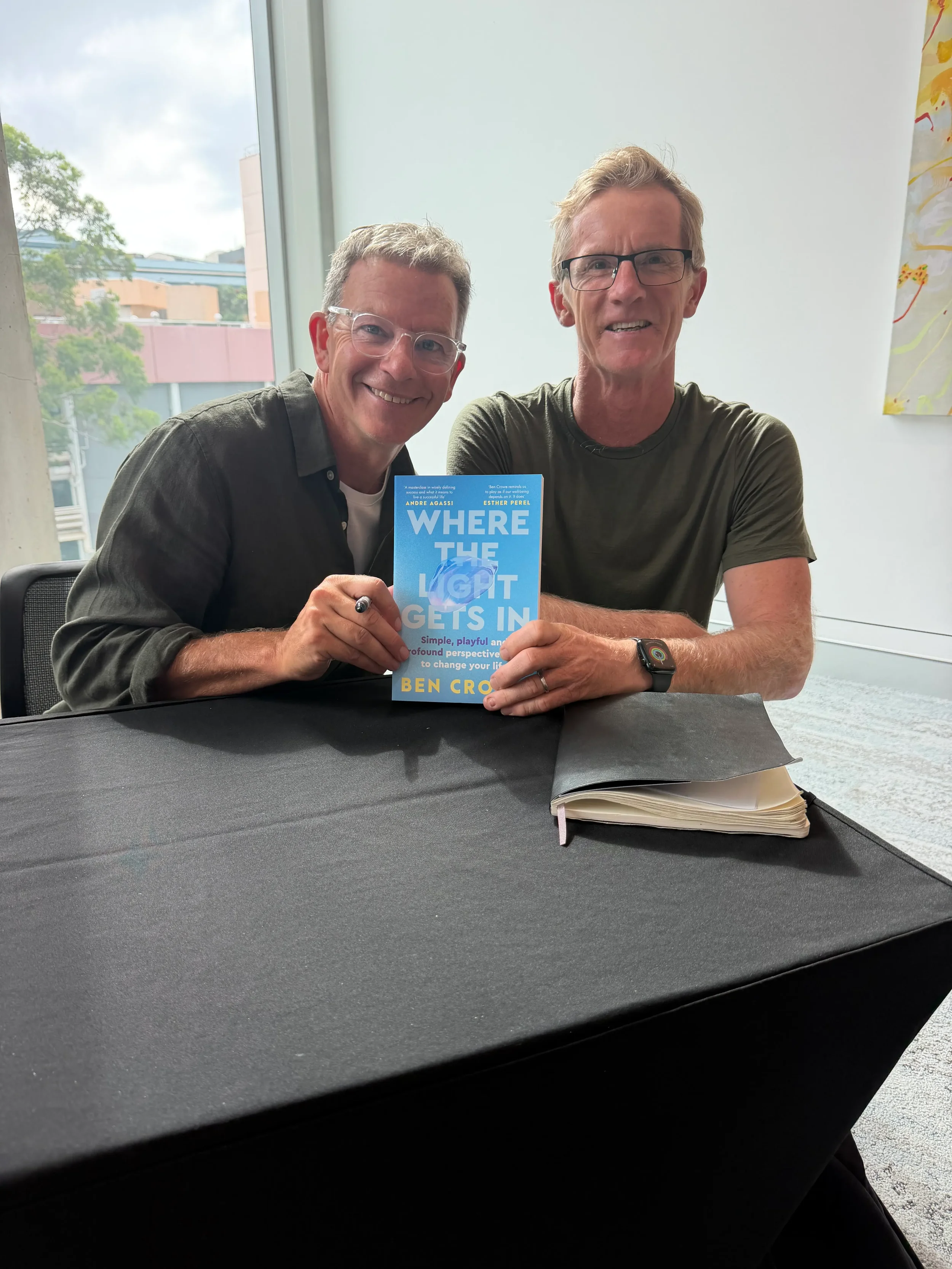
I recently had the privilege of listening to Ben Crowe, one of the world’s most in-demand mindset coaches, at The Growth Faculty conference on 26 Feb 2026. In his new book ‘Where the Light Gets In,’ Crowe dives into exactly these questions.
Fortunately, no matter what our past story is, we can shift our perspective in order to shape our beliefs about ourselves and what we’re capable of. And for leaders, you can also use Crowe’s tool to help your team get past the pressure of expectations and instead live up to their best selves.
1. Perspective: We are the stories we tell ourselves.
A good place to start is perspective; the key lens through which we see the world and ourselves.
The way you see something matters; are you a glass-half-full or half-empty person? If you have a goal, whether you think you can or cannot do it will have a huge say in the outcome… or whether you even take the first step.
One of the greatest discoveries of Crowe’s career is that, thankfully, we do have the power to shift our perspectives.
To start with, consider what your philosophy of life or leadership is - even if you didn’t realise you have one. Oftentimes, your philosophy will have been significantly shaped by others. So challenging that philosophy can help us look at our journeys in a fresh light. While we can’t rewrite our pasts, we can alter our perspectives on them by uncovering the good in them.
The greatest discovery of all time can change their whole life simply by changing their perspective.
2. Expectations: Your role in life is not to live up to other people’s expectations of you.
Our negative relationship with expectations, which often come with considerable pressure, is killing our performance and mindset in life itself.
Unfortunately, we are often surrounded by expectations, the idea of constant growth, and others’ opinions, even though we have no control over them. And worrying about these things can make you feel under pressure; ‘pressure’ is worrying about things we can’t control, but trying to control them anyway.
Crowe recommends defining expectations in the same way you define pressure; you shouldn’t feel pressure from others’ expectations, as you can’t control what others think of you. And you should try to remove the expectation of certain outcomes, as you can’t control the future.
“Living up to the expectations of others is not your role in life. It’s not your responsibility.”
Instead, reframe your thinking to what you can do in this moment. What are you free to do today?
3. Use your ‘Triple A’ Mindset Muscles
Use these three mindset tools to help you challenge and change your perspective.
A for Agency: the freedom to choose and make decisions.
Essentially, agency is knowing that while we can’t control what happens to it, we do have agency in how we respond.
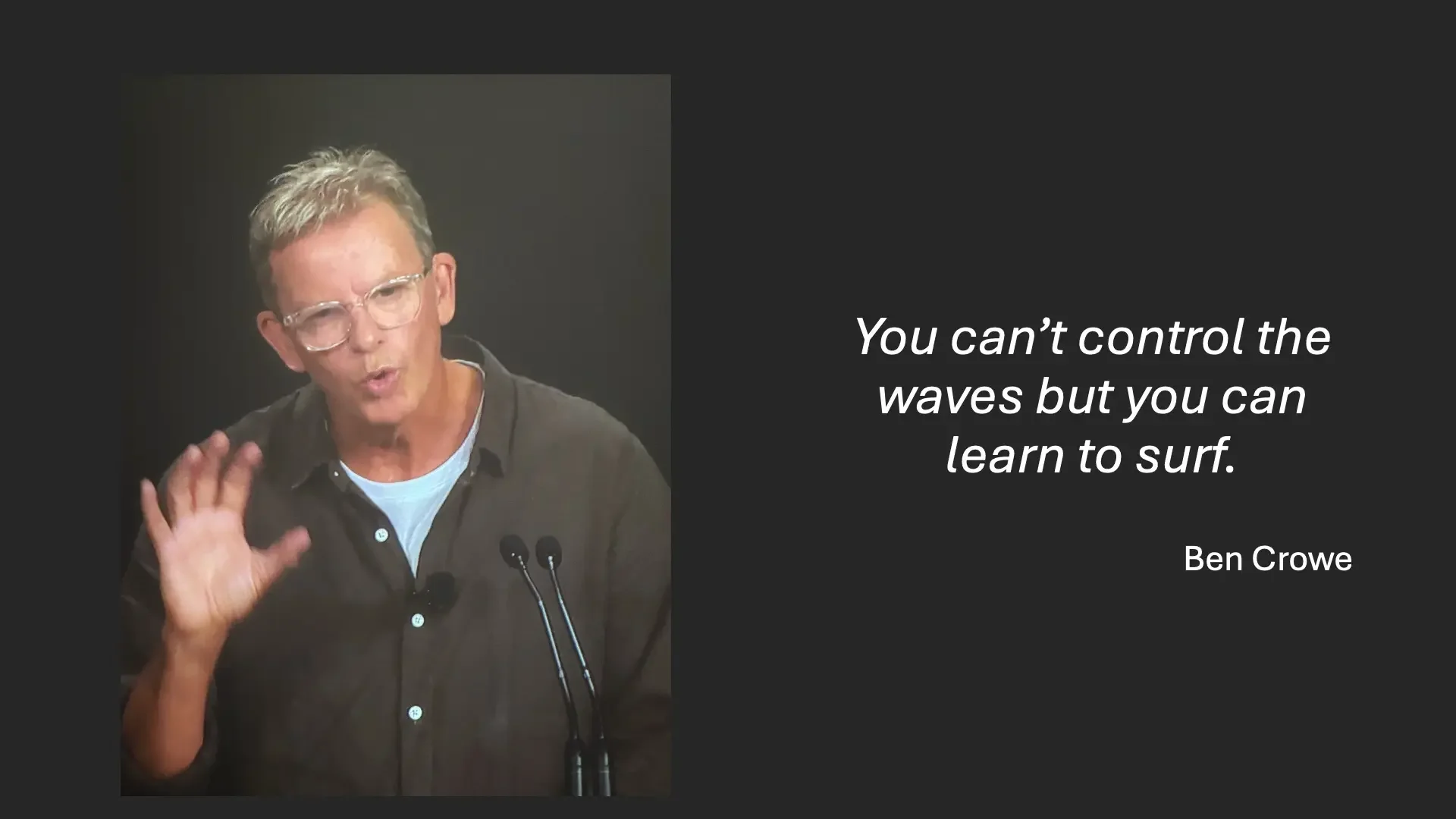
‘You cant’ control the waves, but you can learn to surf.’
Only you decide how you interpret or find meaning in the events in your life, no matter what happens to you. In fact, your greatest growth and learning may come from your ‘darkest times’. By leaning into humility, you can ground yourself back into reality. Meanwhile, by remaining curious during hard times, you can turn adversity into possibility.
And by challenging the stories we tell ourselves and the beliefs that hold us, we can fundamentally change our perspective. So ask yourself: what is one thing you CAN take agency over today? But what should you do when you’re dealing with something you don’t have agency over, it’s time to move on to the next step:
A for Acceptance: allow things to be as they are
Acceptance is the simple acknowledgement that things are as they are, and they can’t be any other way, and be non-judgmental about these things.
This also includes learning self-acceptance; be kinder to yourself, and accept that you can’t always control the things around you. You’re only human.
When should you choose acceptance over agency?
While agency reminds us not to be complacent about what we can change, acceptance helps us live with what is out of our control. When facing a dilemma, ask yourself, “Can I do something about this?” If so, take action. And if not, ask yourself if you can accept it?
You can practice answering this question next time you’re stuck in traffic or waiting for your coffee at a busy cafe!
A for Appreciation: focus on what you’ve got, rather than what you haven’t
Whether you call it gratitude, thankfulness, or just being lucky, appreciation helps you stop stressing about the little things by focusing on what’s important. By replacing your expectations or entitlement with appreciation, you can start feeling grateful for what’s already in front of you.
A simple form of appreciation is by changing the verb ‘I’ve got to’ to ‘I get to.’ For example: ‘I get to collect the kids from school’, ‘I get to see a new client’, ‘I get to clean the house’ or ‘I get to pick something up for my wife.’’ After all, having kids, partners, homes, or jobs is something to be grateful for. In some cases, your inconvenience is what somebody else is dreaming about.
Crowe also likes to lean on the Japanese philosophy of wabi-sabi, which sees beauty in the “imperfect, impermanent, and incomplete”; just because things aren’t exactly as we’d choose them to be, it doesn’t mean they’re inadequate.
Another simple exercise you can try is writing a ‘to-be list’ before you start your morning ‘to-do list.’ Words matter – verbalised thoughts become our truth and determine our universe. If you’re saying it, you are thinking it. It’s not about you: Shift from ‘I’ to ‘WE’
Always remember that leadership is about the people you’re leading, not about you; it’s in serving your team, getting to know them, and helping them.
So to be the head of a successful team, you need to focus on belonging, rather than fitting in.
Most successful teams focus on belonging, rather than fitting in. Belonging cues include eye contact, everyone speaking equally (sharing information vs 1 person talking), using people’s names, and using ‘we’ instead of you’ or ‘I’.
Crowe says there are two types of leaders in the world: those who see vulnerability as a strength/superpower (curious, open-minded, adaptable, innovative, compassionate) and those who see it as a weakness (closed-minded). Remove the pressure and expectations, and create an environment that helps others be their best.
If you want to bring more vulnerability into your workforce, start by asking your team, ‘What is the one thing I could do to be a better leader?’
A great leader will likely go through the three stages of a hero’s journey: beginning with the stage that’s all about ‘ME,’ then continuing to being lost in the forest (this second crucial stage is where the learning happens), and the final stage is that integral transformation from Me to We; this is where you become an authentic leader who realises your job isn’t about you, but about the impact you can have when realising someone else’s potential.
Have self-compassion and self-belief It’s time to uncouple your sense of self-worth from your performance. Instead, believe in your potential even if you have not got it there yet. When thinking about your identity, first consider what you can control, like your core values. And let go of what you can’t; what others think about us or expect of us.
We all have thousands of thoughts every day, so if we’re telling ourselves a negative story, it’s going to be harder to stop believing it.
Finally, remember that you’re worthy just as you are. Whether you win or lose today or in life, trust that you are enough. And know that because you are already worthy just as you are, you can find the courage to believe in your potential and keep chipping away. You will get through this.
Key takeaways:
Lean into the Stoic concept of accepting and letting go of the uncontrollable, and of focusing all your attention on the controllables, as a powerful way to reduce pressure and create freedom.
Living up to others&’ expectations is not your role in life.
We are human beings, not human doings - so DO less and BE more.
Beliefs get shaped by our life story… but you have control over what story you tell yourself by shifting your perspective through agency, acceptance, and appreciation.
For more info: Book – Where the Light Gets In. Ben Crowe. 2026